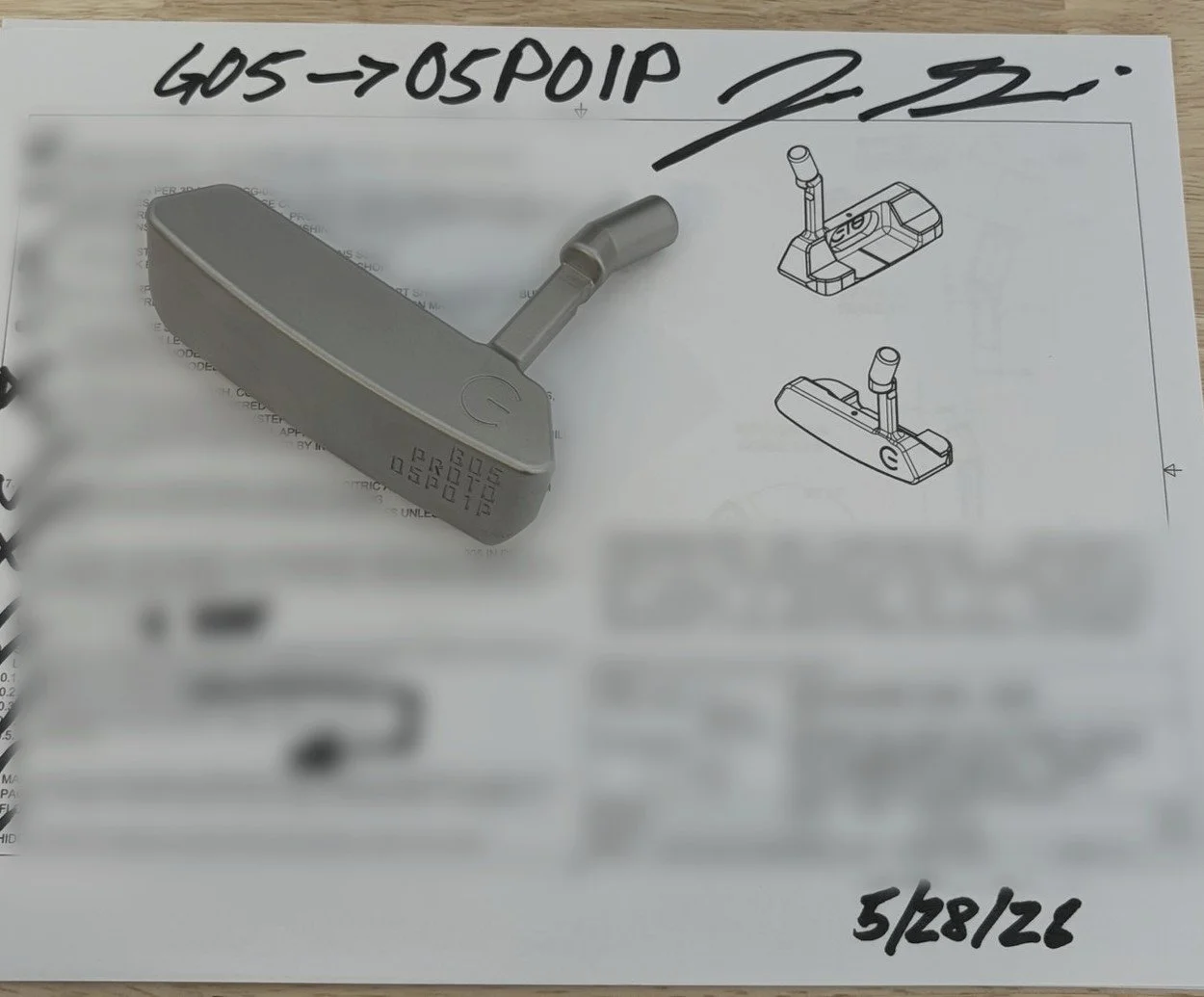
The engineer who designed it is the one fitting you into it. Not a box-store fitting. A technical consultation.
If your current putter is right for you, I'll tell you.
This fitting has no agenda. If a different configuration suits your stroke better than the one you expected, you'll know why, with the physics to back it up.
The person analyzing your stroke is the same person who created its geometry, tuned its mass distribution, and fundamentally understands the physics that govern how it performs.
Specific. Transparent. Rare.
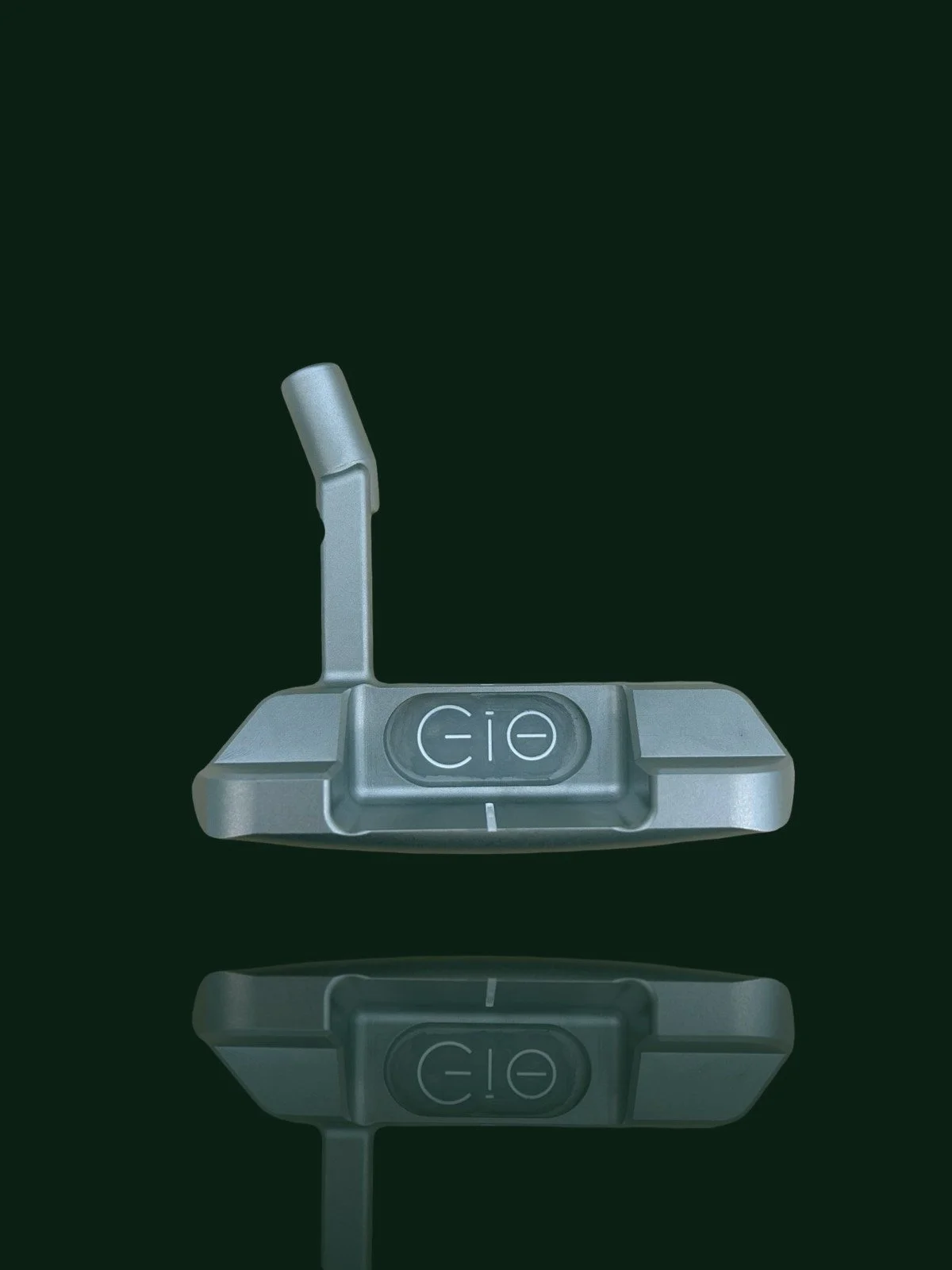
Before your consultation, you complete a detailed intake. It is analyzed the way a design requirement is comprehensively analyzed.
Your stroke is broken into measurable data: face angle, path, tempo, impact location, shaft lean, rotation. Instrument the system, collect the data, eliminate the guesswork.
Every metric is reviewed against the mechanical characteristics of each configuration. This is not pattern matching. The output is a specification, not a suggestion.
Your putter does not exist yet. It is built to the specifications your fitting produced and locked to your stroke. Assembled by hand by the engineer who designed it.
The product is engineered. The fit is yours. All of it done by the same person.
Each parameter of your putter is determined from your stroke and preferences. Select any parameter below to see what it controls.
The overall length of the putter, from the grip cap to the center of the sole.
TYPICAL · 32-36 inThe angle between the shaft and the ground when the sole sits flat at address.
TYPICAL · 68-74°The angle between vertical and the putter face. Key to dynamic loft during the stroke.
TYPICAL · 2-4°The angle the face makes with the horizontal when free to rotate on a flat surface. A key parameter to feeling the putter during the stroke, and plays a role in face rotation through the stroke.
-90° SQUARE · UP TO 30°The mass of the shaft. It moves the balance point of the finished putter and changes how the putter feels through the stroke.
TYPICAL · 90-135 gThe grip you putt with. Shape and size both play a significant role in overall feel, as well as registering the face throughout the stroke.
PISTOL · FLAT · ROUND · STD TO JUMBOHow the shaft joins the head. A plumber's neck and a shaft aligned to the vertical plane of the CG produce different toe hang and offset.
PLUMBER'S · CG PLANEThe head shape: a traditional blade, a mid-mallet, a fang mallet, or a full mallet. Each carries a different MOI and CG envelope.
BLADE · MID-MALLET · FANG MALLET · MALLETYour intake and your stroke data are submitted remotely. What follows is a technical consultation with the engineer who designed the putter, not a form you send off and wait on. Wherever you play, the same engineer, the same process, the same outcome.
The fitting establishes the specification. The course confirms it. Every round, measured and quantified by the engineer who built your putter.
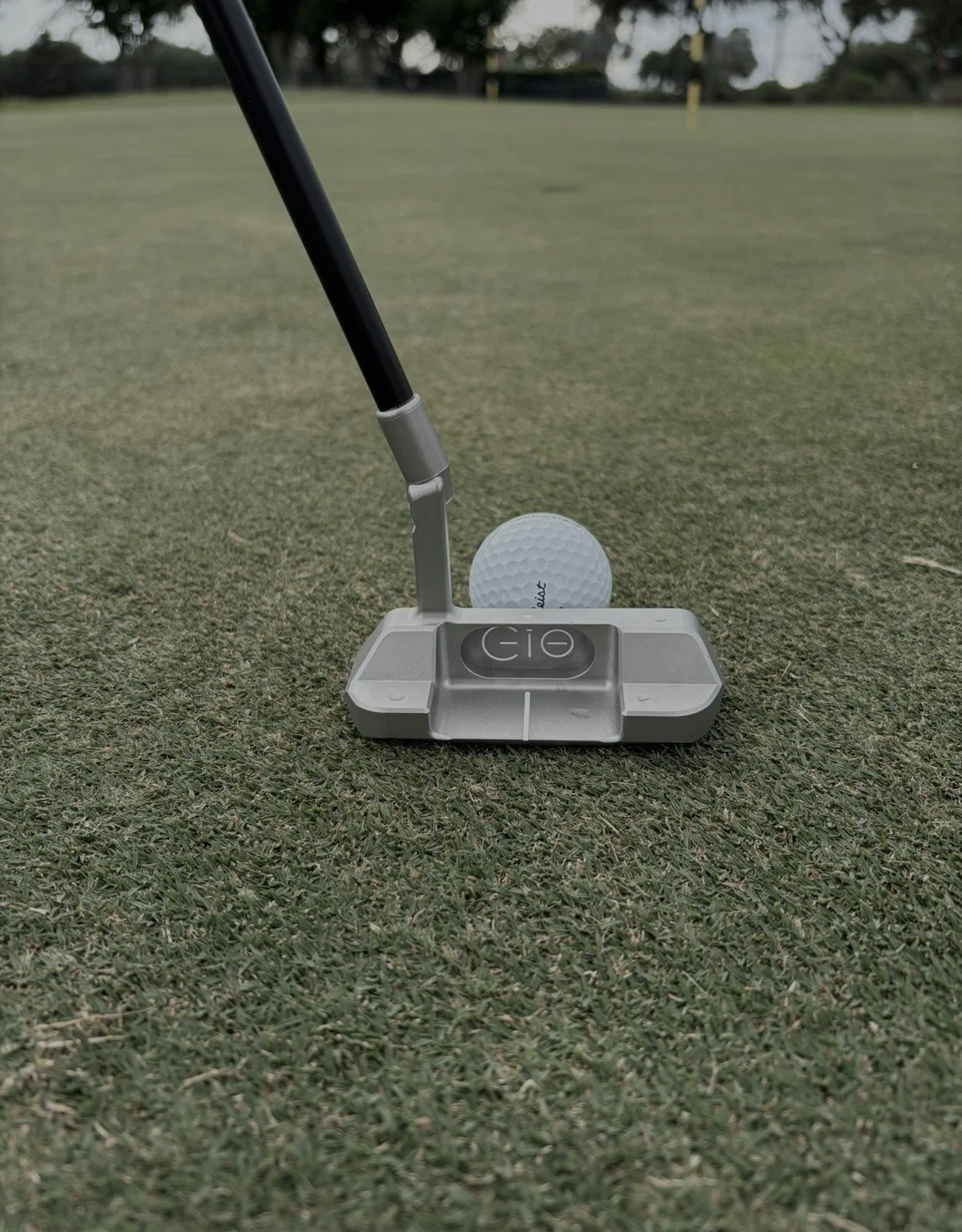
The test data never stops.
An enrolled care program for your putter. Shaft, grip, loft, lie, and finish, kept to your fitted specification by the engineer who built it. Restored to specification, season after season.
Sign up now and be first in line when fittings open.
MEET THE ENGINEER →Prototype access. Launch priority. The work, as it happens.